The ballot for the next election, which is coming up on Tuesday, November 3, 2026, will include ideas for three changes, or amendments, to the Constitution of Virginia. The Constitution of Virginia is the document that defines and limits the powers of state government and the basic rights of Virginians.
The proposed Constitutional amendments deal with reproductive freedom, marriage equality, and restoring voting rights. They will appear on your ballot as Question 1, Question 2, and Question 3.
Question 1 – Reproductive Freedom
Here is the question that will appear on your ballot: “Should the Constitution of Virginia be amended to (i) protect the freedom to make personal decisions about prenatal care, childbirth, postpartum care, birth control, abortion, miscarriage management, and fertility care; (ii) protect doctors, nurses, and patients from being punished for these decisions; and (iii) allow for restrictions on access to abortion during the third trimester of pregnancy except when the patient’s health is at risk or the pregnancy cannot survive?”
- A “yes” vote will allow people to make decisions about their reproductive health and protect medical practitioners for their decisions. It will allow for restrictions on access to abortion during the third trimester except when the patient’s health is at risk or the pregnancy cannot survive.
- A “no” vote says you are against these changes.
Background: The Virginia Constitution does not give to its citizens the right to make personal decisions about prenatal care, childbirth, postpartum care, birth control, abortion, miscarriage management, and fertility care.
To learn more about Question 1, visit the Virginia Department of Elections website.
Question 2 – Marriage Equality
Here is the question that will appear on your ballot: “Should the Constitution of Virginia be amended to (i) remove the ban on same-sex marriage; (ii) affirm that two adults may marry regardless of sex, gender, or race; and (iii) require all legally valid marriages to be treated equally under the law?”
- A “yes” vote will protect the freedom to marry for all couples, regardless of sex, gender, or race. A “yes” vote will also require all legally valid marriages to be treated equally.
- A “no” vote says you are against these changes.
Background: The Virginia Constitution currently bans same-sex marriage. In 2015, the U.S. Supreme Court ruled that same-sex couples have the right to marry under federal law, and that U.S. Supreme Court ruling means that Virginia’s ban is no longer valid. However, if the U.S. Supreme Court ruling is overturned, the Virginia Constitution’s ban on same-sex marriage would once again become law.
To learn more about Question 2, visit the Virginia Department of Elections website.
Question 3 – Restoring Voting Rights
Here is the question that will appear on your ballot: “Should the Constitution of Virginia be amended (i) to provide for the fundamental right to vote in the Commonwealth, (ii) to revise the qualifications of voters so that a person convicted of a felony is not entitled to vote during his period of incarceration but is automatically invested with the right to vote upon release from incarceration, and (iii) to update the existing prohibition on voting by persons found to be mentally incompetent to instead apply to persons who have been found to lack the capacity to understand the act of voting?”
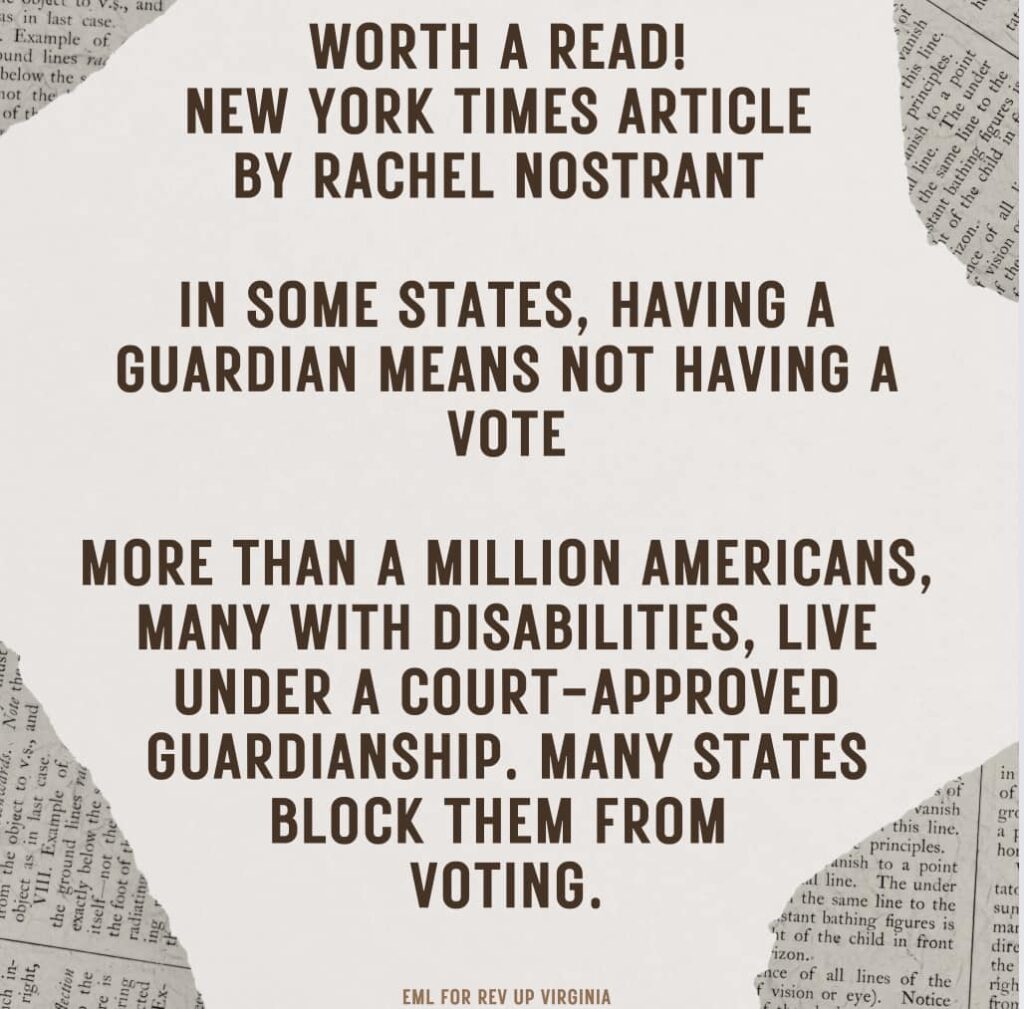
- A “yes” vote supports the right of all qualified Virginians to vote. A “yes” vote will also support a new, automatic path for restoring the right to vote for a person who has been convicted of a felony. A “yes” vote also protects voting rights for people under a guardianship by requiring a specific court finding before a person’s right to vote can be taken away.
- A “no” vote says you are against these changes.
Background: Virginia’s Constitution currently says that a person who is convicted of any felony loses the right to vote for the rest of their life unless the Governor of Virginia takes action to restore that specific person’s right to vote. The Constitution also says that if a person is found by a court to be incapacitated in any way (even if, for example, the incapacity is physical only), that person automatically loses the right to vote.
To learn more about Question 3, visit the Virginia Department of Elections website.
If you have questions or problems voting, use the Election Protection Hotline: 866-OUR-VOTE (866-687-8683). You can call or text the hotline to reach a nonpartisan volunteer. View hotline numbers for volunteers who speak Spanish, Arabic, and Asian languages, as well as how to reach the ASL Voter Assistance Hotline.